
Retrofitting GPS Guidance for Paver Accuracy
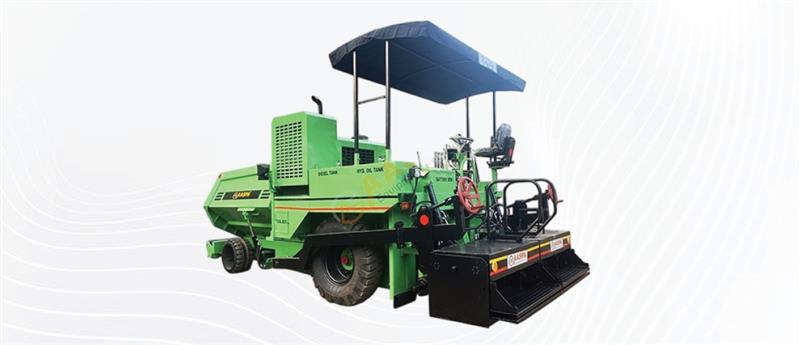
When it comes to road construction, achieving precise and consistent paving is crucial for durability, safety, and a smooth ride. Retrofitting your existing pavers with GPS guidance technology is a smart move that significantly boosts accuracy, reduces material waste, and ultimately saves you money. It’s about bringing your current equipment up to modern standards, unlocking a whole new level of control and efficiency without needing to buy all new machinery.
Why GPS Guidance Matters for Paver Accuracy
Paving accuracy isn’t just about making things look good. A truly precise paving job ensures uniform material thickness, proper sloping for drainage, and a consistent surface texture. Without this, you risk premature road deterioration, water pooling, and an uncomfortable driving experience.
Manual paving methods, while still used, are inherently prone to human error. Stakes and strings are time-consuming to set up and easily disturbed. Even skilled operators can struggle to maintain perfect consistency over long stretches or complex geometries. GPS guidance takes much of this variability out of the equation.
The Problem with Traditional Paving Methods
Traditional paving relies heavily on string lines, optical instruments, and the keen eye of experienced operators. While these methods have served the industry for decades, they come with a distinct set of limitations that can impact both the quality and cost-effectiveness of a project.
Human Error and Inconsistency
No matter how skilled an operator is, maintaining perfectly consistent material thickness and slope across vast stretches of pavement is incredibly challenging. Fatigue, varying site conditions, and the sheer volume of data an operator needs to process in real-time can lead to small deviations. These minor inconsistencies, when accumulated, can result in uneven surfaces, poor drainage, and ultimately, a reduced lifespan for the paved surface.
Time-Consuming Setup
Setting up string lines and optical guides is a meticulous and time-intensive process. It requires dedicated crew members to carefully measure, stake, and tension lines, ensuring they accurately reflect the design specifications. Any errors in this setup phase can propagate throughout the entire paving process, leading to costly rework. Furthermore, these lines are susceptible to being knocked out of alignment by equipment or personnel, necessitating frequent checks and adjustments.
Material Waste
When paving isn’t consistently accurate, contractors often err on the side of caution, laying down a thicker layer of material than strictly necessary. This over-compaction or over-layering, while seemingly a minor issue, translates into significant material waste over the course of a large project. Asphalt and concrete are expensive commodities, and any reduction in their efficient use directly impacts the project’s bottom line. Inaccurate slopes can also lead to areas requiring additional material to correct drainage issues after the fact.
Difficulty with Complex Designs
Modern road designs often incorporate varying cross-slopes, superelevation on curves, and intricate transitions. Replicating these complex geometries accurately with traditional string line methods is extraordinarily difficult. It requires constant re-staking and precise adjustments, slowing down the paving process and increasing the likelihood of errors. Maintaining smooth transitions between different slopes is also a particular challenge, often leading to subtle bumps or dips in the finished surface.
Limited Real-Time Feedback
Traditional methods offer limited real-time feedback to the paver operator regarding their current position relative to the design. Operators largely rely on looking at the string line or the reference points. This makes immediate adjustments difficult and often means deviations are only noticed after they’ve occurred, potentially requiring corrective measures or even removal and re-paving of sections. The ability to see exactly where the paver is in relation to the digital design model empowers operators to make proactive, precise adjustments.
How GPS Guidance Changes the Game
Retrofitting GPS guidance onto a paver fundamentally transforms how the machine operates, offering a suite of benefits that address the limitations of traditional methods head-on. It’s essentially giving your paver a highly intelligent, real-time map and a precise set of instructions to follow.
High-Precision Positioning
At its core, GPS guidance provides extremely accurate positioning of the paver in real-time. This isn’t your average car navigation GPS; these systems typically use RTK (Real-Time Kinematic) or VRS (Virtual Reference Station) technology. These advanced methods can achieve centimeter-level accuracy, far surpassing what’s possible with human sight and string lines. This precision ensures that the paver consistently lays material exactly where it’s supposed to be, according to the digital design model.
Real-Time Grade and Slope Control
The GPS system constantly compares the paver’s current position and elevation to the digital design model (a 3D CAD drawing of the planned road surface). It then provides instantaneous feedback and control signals to the paver’s automatic screed controls. This means the screed, which determines the thickness and slope of the material, is continuously adjusted without manual intervention. This constant, automatic adjustment results in highly consistent material thickness and precise slopes, crucial for proper drainage and structural integrity.
Elimination of String Lines and Stakes
One of the most immediate and tangible benefits is the removal of string lines and the need for frequent staking. This significantly reduces setup time, labor costs associated with staking crews, and the possibility of these physical guides being disturbed. The work area becomes less cluttered and safer, as there are fewer obstacles for equipment and personnel to navigate around. This also allows for greater flexibility in terms of site access and material delivery.
Data-Driven Efficiency
GPS guidance systems are not just about guiding the paver; they’re also powerful data collection tools. They record the “as-built” position and elevation of the paved surface. This data can be instantly compared against the “as-designed” model, providing immediate quality control insights. Any deviations can be identified and addressed quickly. This collected data is invaluable for project documentation, quality assurance reports, and for optimizing future paving operations. It provides an objective record of performance that traditional methods simply can’t match.
Improved Resource Utilization
By achieving precise paving the first time, retrofitted GPS guidance minimizes the need for rework, reducing labor hours and equipment operating costs. More importantly, it drastically cuts down on material overruns. Laying the exact design thickness instead of an arbitrary margin of error translates into substantial savings on expensive materials like asphalt and concrete over the lifespan of a project. This optimized resource allocation directly improves project profitability and sustainability.
Enhanced Safety
A worksite free of numerous string lines and stakes is inherently safer. There’s less risk of tripping hazards for ground personnel and fewer obstacles that equipment could accidentally disturb. Operators also benefit from a clearer view of their surroundings, as their attention isn’t solely fixed on aligning with a string. The automated control reduces operator fatigue, allowing them to focus more on overall site awareness.
Key Components of a Retrofit GPS System
Understanding the parts of a GPS guidance system helps clarify how it all works together to deliver that precision. It’s a combination of hardware and software designed to communicate and control.
GPS Receivers
These are the “eyes” of the system, typically mounted in multiple locations on the paver often on masts extending from the screed. They receive signals from GPS satellites as well as correction signals from a base station or network. The number and placement of receivers are critical for accurate positioning and determining the orientation of the screed.
Control Box/Computer
This is the “brain” of the system. It takes the highly accurate position data from the GPS receivers and the 3D digital design model. It then calculates the necessary adjustments to the paver’s screed to achieve the desired grade and slope. This unit typically has a display for the operator to monitor progress, view the design, and make any necessary adjustments.
Automatic Screed Controls
These are the actuators and sensors that directly interface with the paver’s existing hydraulic system. Based on the commands from the control box, they automatically raise, lower, and tilt the screed to maintain the programmed material thickness and cross-slope. Modern pavers often have interfaces that make integrating these controls relatively straightforward.
Digital Design Model (3D CAD Data)
This is the “blueprint” for the paving project. It’s a digital file, typically in a CAD format, that contains all the exact elevations, slopes, curves, and transitions of the finished road surface. The GPS system uses this model as its reference for guiding the paver. Without an accurate 3D model, the GPS system has no target to aim for.
Base Station or VRS Connection
To achieve the centimeter-level accuracy required for paving, the GPS receivers on the paver need correction data. A local base station, set up on-site, transmits these corrections, or the paver can connect to a Virtual Reference Station (VRS) network via a cellular modem. This correction data eliminates the small errors inherent in basic GPS signals, allowing for extremely precise positioning.
Steps to Retrofit GPS Guidance
Retrofitting isn’t quite as plug-and-play as adding a new radio to your car, but it’s a well-established process that can be managed effectively. It usually involves a series of coordinated steps.
Site Assessment and Planning
Before anything is installed, it’s crucial to evaluate your existing paver. What model is it? Does it have the necessary hydraulic and electrical interfaces for automation? What kind of paving jobs do you typically do? This stage also involves selecting the right GPS system provider and discussing your specific needs and project types. This initial planning helps ensure compatibility and proper system selection.
Digital Model Preparation
The success of a GPS-guided paver hinges on an accurate 3D digital design model. This model, often created by engineers or surveyors, outlines the exact specifications for the road surface. Ensure this model is clean, accurate, and in a format compatible with the chosen GPS system. Sometimes, existing 2D designs need to be converted to 3D.
Hardware Installation
This involves physically mounting the GPS receivers, control box, and any necessary sensors onto the paver. Masts for the GPS receivers are often custom-fabricated or adapted to ensure stable and optimal signal reception. Wiring connects the components to the paver’s power and hydraulic systems. This step generally requires skilled technicians who understand both heavy equipment and precision electronics.
Integration with Paver Controls
The new GPS guidance system needs to communicate effectively with the paver’s existing automatic screed controls. This is where the hydraulic and electrical interfaces come into play. The system needs to be able to send commands to precisely control the screed’s height and tilt. This integration requires careful calibration and testing to ensure seamless operation.
Calibration and Testing
Once installed, the entire system needs thorough calibration. This involves accurately measuring the distances and angles between the GPS receivers, screed, and other critical points on the paver. These measurements are entered into the control software to ensure the system accurately knows its own geometry. After calibration, extensive testing is performed, often on a test strip, to verify accuracy and functionality before deployment on a live project.
Operator Training
Even with automation, skilled operators are vital. Comprehensive training is essential to teach operators how to understand the display, interpret the feedback, troubleshoot minor issues, and take manual control if needed. They’ll learn how to load design files, manage real-time data, and optimize the system’s performance on various job sites.
Understanding the Technology Behind GPS Guidance Retrofitting
While we’ve touched on components, diving a little deeper into the underlying technology clarifies why these systems are so powerful and accurate. It’s not just about a simple GPS chip.
RTK and VRS Technology
As mentioned, standard GPS is usually accurate to within a few meters. For paving, that’s not nearly good enough. This is where Real-Time Kinematic (RTK) and Virtual Reference Station (VRS) technology come in. These methods use a fixed base station (either a physical one on site or a virtual one provided by a network) whose exact coordinates are known. This base station also receives GPS signals and calculates the errors in those signals. It then transmits these correction factors to the GPS receivers on the paver, allowing for positioning accuracy down to the centimeter level. This correction is crucial for precision.
Inertial Measurement Units (IMUs)
Some advanced GPS guidance systems incorporate Inertial Measurement Units (IMUs). IMUs contain accelerometers and gyroscopes that can detect changes in the paver’s pitch, roll, and yaw (its orientation in space). While GPS provides global position, IMUs help provide very rapid and precise updates on the paver’s orientation, especially during short GPS signal outages (like under a bridge) or when needing very smooth transitions. This helps maintain screed stability even over uneven ground.
Digital Terrain Models (DTMs) and Design Files
The “brain” of the system constantly references a Digital Terrain Model (DTM), which is essentially a 3D map of the desired finished surface. This DTM is derived from the engineering design files. The system isn’t just telling the paver to go to a certain point; it’s constantly telling the paver what the target elevation and slope should be at its exact current position according to the detailed 3D model. This dynamic referencing allows for the complex geometries and smooth transitions needed in modern road construction.
Communication Protocols
Reliable communication is vital. The components within the GPS system (receivers, control box, screed controls) need to talk to each other quickly and consistently. This often involves robust, industrial-grade communication protocols designed to operate in harsh construction environments. Additionally, for VRS systems, cellular or radio communications are used to transmit correction data. All this communication happens in real-time, allowing for instant adjustments to the paver’s screed.
FAQs
- What is GPS guidance retrofitting for paver accuracy?
GPS guidance retrofitting for paver accuracy involves the installation of GPS technology onto existing paving equipment to improve accuracy and efficiency in paving operations. This technology allows for precise positioning and guidance, resulting in smoother and more accurate pavement surfaces.
- What are the advantages of retrofitting GPS guidance for paver accuracy?
Retrofitting GPS guidance for paver accuracy offers several advantages, including improved paving accuracy, reduced material waste, increased productivity, and enhanced safety. The technology allows for better control and monitoring of the paving process, leading to higher quality results and cost savings.
- How does GPS guidance retrofitting improve paver accuracy?
GPS guidance retrofitting improves paver accuracy by providing real-time positioning and guidance information to the operator. This allows for precise control of the paving equipment, resulting in smoother and more uniform pavement surfaces. Additionally, the technology helps to minimize errors and rework, leading to improved overall accuracy.
- What are the key considerations for retrofitting GPS guidance for paver accuracy?
Key considerations for retrofitting GPS guidance for paver accuracy include selecting the right GPS system for the specific paving equipment, ensuring compatibility with existing control systems, and providing adequate training for operators. It is also important to consider the potential return on investment and long-term benefits of the technology.
- What are the steps involved in retrofitting GPS guidance for improved paver accuracy?
The steps involved in retrofitting GPS guidance for improved paver accuracy typically include assessing the current equipment and control systems, selecting and installing the appropriate GPS hardware and software, calibrating the system for accurate positioning, and providing training for operators. Additionally, ongoing support and maintenance are important for ensuring the continued effectiveness of the technology.