
Stationary vs. Mobile Asphalt Plants: A Buyer’s Comparison
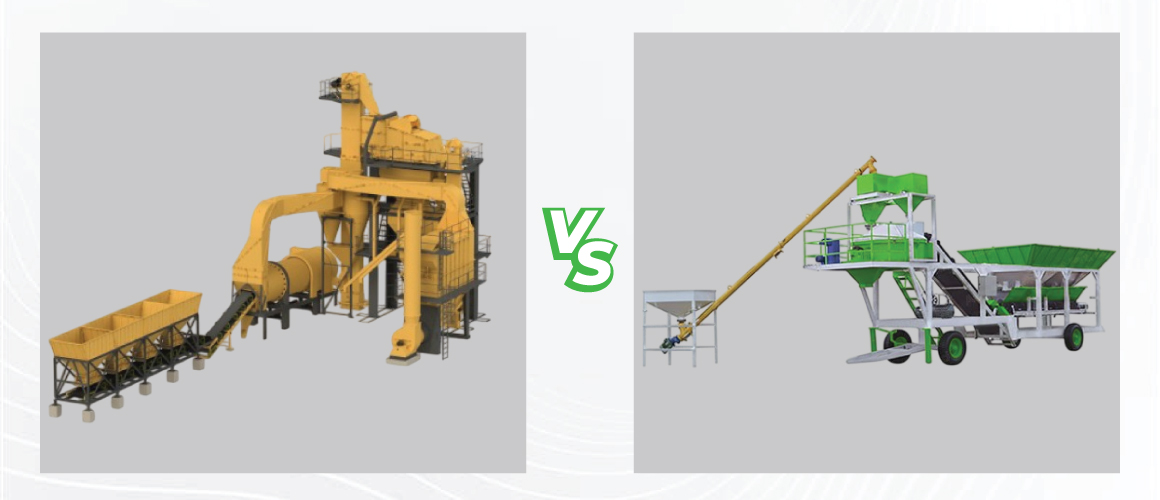
When you’re looking to invest in an asphalt plant, one of the first big decisions you’ll face is whether to go with a stationary or a mobile unit. The quick answer is this: stationary plants are generally for long-term, high-volume production in one location, while mobile plants offer flexibility for projects that move around. But there’s a lot more nuance to consider when making this significant purchase.
Understanding the Core Differences
Let’s break down what really sets these two types of asphalt plants apart. It’s not just about wheels; it’s about how they’re designed to operate and what kind of projects they’re best suited for.
Stationary Asphalt Plants
Think of a stationary plant as a permanent fixture. These are large, robust installations designed for continuous operation in a fixed location. They often have higher production capacities and are built to last for decades.
What Defines Them
Stationary plants are characterized by their substantial foundations, often requiring significant civil works before installation. They typically feature larger components, such as bigger aggregate bins, longer drying drums, and more extensive dust collection systems. This all contributes to their ability to handle greater throughput and process materials more efficiently over extended periods. Their control systems are usually more sophisticated, allowing for precise recipe management and quality control, which is critical for large-scale infrastructure projects.
Common Applications
You’ll typically find stationary plants supplying asphalt for major highway construction, large urban development projects, or for municipalities with ongoing road maintenance needs. If you’re running a quarry or a large-scale construction company that consistently needs a high volume of asphalt in the same geographical area for many years, a stationary plant is often the logical choice. They thrive in environments where the demand is consistent and the haul distances to project sites are manageable from a central production hub.
Mobile Asphalt Plants
Mobile plants, as the name suggests, are built for movement. Their design prioritizes ease of transport and quick setup, making them ideal for projects where the production location needs to change frequently.
What Defines Them
These plants are engineered with modular components that can be quickly dismantled, transported, and reassembled. They typically come mounted on trailers or skids, allowing them to be moved between different job sites. While they might not match the sheer output of the largest stationary plants, their design focuses on efficiency in relocation. They often feature integrated electrical and pneumatic systems to simplify setup. The compromises for mobility often come in the form of slightly smaller component sizes and sometimes a more simplified control interface compared to their stationary counterparts, though modern mobile plants are increasingly sophisticated.
Common Applications
Mobile plants shine on remote job sites, smaller-scale projects, or when a contractor operates across a wide geographical area. Think of rural road construction, airport runway repairs, or situations where hauling finished asphalt from a stationary plant would be too costly or impractical. They are perfect for contractors who bid on projects in different regions and need to set up shop near the work to reduce transportation costs and ensure fresh asphalt delivery.
Factors to Consider When Choosing
Deciding between a stationary and a mobile plant isn’t just about what they are, but what they can do for your business. Several key factors should guide your decision-making process.
Project Duration and Location Stability
This is perhaps the most critical factor. If your business primarily undertakes long-term projects (many years) in a single geographic area, or if you plan to supply asphalt to a consistent market from a fixed point, a stationary plant makes financial sense. The initial investment is higher, but the long-term operational costs can be lower per ton due to economies of scale and consistent operation. Conversely, if your projects are shorter-term, span across different regions, or require you to frequently move your production capabilities, a mobile plant is invaluable. The ability to relocate quickly minimizes downtime between projects and reduces asphalt transportation costs significantly.
Production Capacity and Throughput Needs
Stationary plants are generally designed for higher production volumes. If you need to produce hundreds or even thousands of tons of asphalt per day consistently, a stationary plant will likely be your best bet. They are built for continuous, high-output operation. Mobile plants, while increasingly efficient, typically have lower maximum production capacities. They are excellent for projects requiring moderate volumes, perhaps a few hundred tons daily. Matching the plant’s capacity to your average and peak project demands is crucial to avoid either overspending on an oversized plant or constantly struggling to meet demand with an undersized one.
Initial Investment and Operating Costs
The upfront cost of a stationary plant is typically higher, considering not just the plant itself but also the significant civil engineering work, foundations, and often more extensive permitting. However, over its long lifespan and high production volumes, the cost per ton of asphalt produced can be lower due to economies of scale, more efficient fuel consumption (often due to larger, more optimized burners), and potentially lower maintenance costs per operational hour for robust, well-maintained components.
Mobile plants usually have a lower initial capital investment. Their main cost advantage often comes from reduced transportation costs of the finished product. By moving the plant closer to the project, you save significantly on fuel and labor associated with trucking asphalt, which can be a substantial portion of a project’s budget. However, relocation costs (disassembly, transport, reassembly) must be factored in, and while less than setting up a stationary plant, they are not insignificant for each move.
Permitting and Environmental Requirements
Permitting for any asphalt plant can be a complex process, involving environmental impact assessments, air quality permits, noise regulations, and zoning approvals. Stationary plants, due to their permanent nature and potentially larger emissions, often face more stringent and time-consuming permitting processes. They are fixed assets that become part of the local industrial landscape. Mobile plants, while still requiring permits for their operation, can sometimes navigate permitting processes more smoothly if they are considered “temporary” installations, depending on local regulations. However, they still need to meet emission standards and local ordinances wherever they set up. The environmental footprint of both types is a major consideration, and modern plants, regardless of type, are incorporating more sophisticated dust collection and emission control technologies.
Maintenance and Downtime
Maintenance is a reality for any heavy machinery. Stationary plants, with their robust construction, are designed for ease of maintenance on-site, with larger access points and dedicated maintenance areas. While downtime can be costly, it’s often scheduled and planned well in advance. Mobile plants are designed for quick repair and replacement of modular components to minimize downtime during relocation or on-site. However, the frequent movement and assembly/disassembly can introduce new points of wear and potential issues if not handled carefully.
Advantages and Disadvantages of Stationary Asphalt Plants
Let’s summarize the key benefits and drawbacks of going with a permanent setup.
Advantages of Stationary Plants
Higher production capacity is a significant draw, allowing for large-scale output. Consistent quality control is another strong point, thanks to sophisticated systems and stable operation. They generally have a lower cost per ton over the long run because of economies of scale. Their robust construction often translates to a longer operational lifespan and perhaps less frequent extreme wear compared to constantly moving parts. They can also accommodate a wider range of auxiliary equipment like large storage silos, crumb rubber modifications, or advanced recycling capabilities, further enhancing their versatility.
Disadvantages of Stationary Plants
The major downsides include a significant initial investment, which can be a barrier for some businesses. They also involve high transportation costs for the finished product if project sites are far away. Permitting can be a lengthy and complex process, and once installed, they lack flexibility you’re tied to that location. Adapting to fluctuating market demands or project locations becomes challenging.
The Benefits of Investing in a Mobile Asphalt Plant
| Benefits of Investing in a Mobile Asphalt Plant |
| 1. Increased production efficiency |
| 2. Cost savings on transportation |
| 3. Flexibility in project locations |
| 4. Reduced environmental impact |
| 5. Quick setup and dismantling |
| 6. Better control over asphalt quality |
Mobile plants offer a different set of advantages, particularly for certain business models.
Key Benefits
The unmatched flexibility and mobility are paramount. You can move the plant close to your project, drastically reducing bitumen and aggregate haul distances for hot mix. This often results in lower transportation costs for the final product, which is a big deal for your bottom line. They typically have a lower initial investment compared to a stationary plant, making them more accessible for some businesses. Faster setup and dismantling times mean less idle time between projects. This rapid deployment capability allows contractors to bid on a wider variety of projects across different geographical areas without being constrained by a fixed production location.
Considerations for Mobile Plants
While mobile plants offer great flexibility, they typically have lower maximum production capacities than their stationary counterparts. This might not be an issue for smaller projects but could limit you on very large bids. Relocation costs, though less than building a new stationary plant, are still a factor to consider for each move. Depending on the design, some mobile plants might have slightly less sophisticated ancillary equipment or limited long-term storage solutions compared to a full-scale stationary setup, which might impact custom mix productions or very high aggregate consistency requirements.
Comparing Performance and Efficiency
It’s not just about capacity; it’s about how efficiently these plants convert raw materials into quality asphalt.
Performance in Different Scenarios
Stationary plants excel in scenarios requiring consistent, high-volume output of standard or specification-heavy mixes. Their larger components and integrated systems allow for optimized drying, screening, and mixing processes, ensuring precise control over the final product. They can often handle a larger percentage of recycled asphalt pavement (RAP) more efficiently due to more robust drying and heating capabilities.
Mobile plants, while potentially having lower overall throughput, are designed for efficiency in varied conditions. Their performance is optimized for rapid deployment and quick production ramps. Modern mobile plants are remarkably efficient in terms of fuel consumption and material handling, especially considering their smaller footprint. They often feature advanced control systems that allow for precise mix adjustments on the fly, crucial for projects with diverse specifications or where material sources might change.
Energy Consumption and Operational Efficiency
Generally, larger stationary plants, due to their scale, can achieve better fuel efficiency per ton of asphalt produced over long, continuous runs. Their advanced control systems can fine-tune burner operations and aggregate drying to minimize energy waste. However, mobile plants are engineered with energy efficiency as a core design principle, particularly in their burners and drying drums, to make them economical to operate in varied locations. The “efficiency” of a mobile plant often comes from the indirect savings of reduced transport costs, which can far outweigh any marginal differences in direct fuel consumption per ton compared to a stationary plant that requires long hauls of finished product. Both types of plants benefit from good operational practices, including regular maintenance and trained operators, to maximize their efficiency.
Both types of plants have environmental considerations, but they manifest differently.
Emissions and Local Impact
All asphalt plants produce emissions, including particulate matter (dust) and gases. Modern stationary plants employ advanced baghouse filters and other control technologies to minimize these emissions. Because they are fixed, their environmental impact is concentrated in a single location, which can become a concern for nearby communities, requiring strict monitoring and compliance.
Mobile plants also utilize emission control technologies, often scaled down to fit their portable design. While their cumulative emissions might be less if they only operate for short periods in different locations, each setup needs to ensure it meets local environmental standards. The advantage here is that their temporary nature can distribute environmental impact rather than concentrating it. However, the movement itself (transportation of plant components) also has a carbon footprint that needs to be considered. Both benefit from using recycled materials like RAP to reduce virgin material consumption and energy use.
Resource Utilization and Sustainability
Stationary plants can be designed to integrate more extensive material recycling facilities, such as large RAP processing units, due to their larger footprint and long-term investment. This can significantly enhance their sustainability profile by reducing reliance on virgin aggregates and bitumen. They might also be better suited for incorporating alternative fuels or more sophisticated energy recovery systems.
Mobile plants are increasingly designed with sustainability in mind, offering good RAP integration capabilities for their size. Their ability to operate closer to aggregate sources and project sites inherently reduces the energy consumption and emissions associated with material transportation both raw and finished. The choice often comes down to balancing the direct operational emissions with the indirect emissions from logistics. Ultimately, a well-managed and technologically advanced plant of either type can operate sustainably.
FAQs
What are the main differences between stationary and mobile asphalt plants?
Stationary asphalt plants are set up in a permanent location and produce large quantities of asphalt, while mobile asphalt plants can be easily transported from one location to another and are ideal for smaller projects or for contractors who need to move their operations frequently.
What factors should be considered when choosing between stationary and mobile asphalt plants?
When choosing between stationary and mobile asphalt plants, factors such as the size and scope of the project, the need for mobility, the availability of resources such as land and utilities, and the budget should be taken into consideration.
What are the advantages and disadvantages of stationary asphalt plants?
Stationary asphalt plants offer high production capacity, long-term reliability, and the ability to produce different types of asphalt mixes. However, they require a significant initial investment, a permanent location, and may not be suitable for smaller projects or for contractors who need mobility.
What are the benefits of investing in a mobile asphalt plant?
Investing in a mobile asphalt plant offers the advantage of flexibility and mobility, making it suitable for smaller projects, remote locations, and for contractors who need to move their operations frequently. Mobile asphalt plants also require a lower initial investment compared to stationary plants.
What is the environmental impact of stationary vs. mobile asphalt plants?
Stationary asphalt plants may have a larger environmental impact due to their permanent infrastructure and higher energy consumption, while mobile asphalt plants are more flexible and can be moved to minimize environmental impact. However, both types of plants can incorporate technologies to reduce emissions and improve environmental performance.