
Upcoming Construction Projects in India
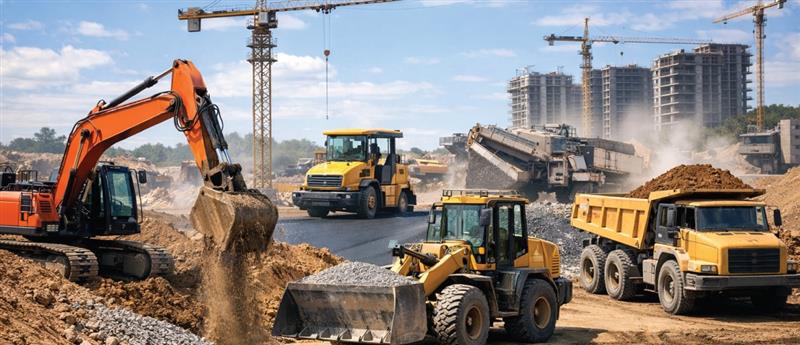
India, a nation in rapid development, currently stands as a significant global player in construction. The scale of development projects across the country is vast, reflecting a determined effort to upgrade infrastructure, accommodate a growing population, and boost economic activity. These projects, ranging from large-scale transportation networks to new urban centers, represent a substantial investment in the nation’s future.
Overview of India’s Construction Sector
India’s construction sector is a core component of its economy, contributing significantly to its Gross Domestic Product. It is a major employer, providing livelihoods to millions. The sector is characterized by a mix of public and private investment, with government initiatives often acting as catalysts for larger-scale developments. The current phase of growth is driven by several factors, including urbanization, industrialization, and a rising middle class with increasing demands for improved living standards and connectivity.
Drivers of Growth
Urbanization, a persistent trend in India, generates a continuous need for housing, commercial spaces, and urban infrastructure. As more people move to cities, the pressure on existing facilities increases, driving new construction projects. Industrialization policies, aimed at making India a manufacturing hub, necessitate the development of industrial parks, logistics corridors, and power infrastructure. Furthermore, a growing middle class fuels demand for modern amenities, better transportation, and improved social infrastructure like schools and hospitals.
Government Initiatives
The Indian government plays a proactive role in stimulating the construction sector through various schemes and policies. Programs such as the “Pradhan Mantri Awas Yojana” aim to provide affordable housing, while “Smart Cities Mission” focuses on developing urban areas with intelligent infrastructure. The “National Infrastructure Pipeline” outlines a comprehensive plan for infrastructure development across different sectors, providing a roadmap for both public and private investment. These initiatives create a predictable environment for investors and developers, acting as a gravitational pull for domestic and international capital.
Major Infrastructure Developments
India’s infrastructure landscape is undergoing a substantial transformation. The focus extends beyond mere capacity expansion to the creation of integrated, efficient networks that underpin economic growth and societal well-being. These projects are the arteries and veins of a modern economy, facilitating the flow of goods, services, and people.
Transportation Networks
The railway sector is experiencing a renaissance with projects like the Dedicated Freight Corridors (DFCs) designed to separate freight and passenger traffic, improving efficiency and reducing transit times. High-speed rail projects, such as the Mumbai-Ahmedabad bullet train, aim to connect major economic hubs with rapid transit. Road construction remains a high priority, with the expansion of national highways and the development of expressways reducing travel times and improving connectivity between states. Port development and modernization projects are crucial for facilitating international trade, enhancing India’s position in global supply chains.
Power and Energy Projects
To meet growing energy demands, India is investing heavily in both traditional and renewable energy sources. This includes the construction of new power plants, particularly those based on solar and wind energy. Hydroelectric projects and advancements in grid infrastructure are also central to ensuring a stable and reliable power supply. The transmission and distribution networks are being upgraded to minimize losses and facilitate the integration of diverse energy sources, acting as the nervous system that delivers power to every corner of the nation.
Water and Sanitation
Access to clean water and adequate sanitation facilities remains a critical area of focus. Projects involve the construction of new water treatment plants, pipelines, and sewage networks. River rejuvenation programs and initiatives to improve urban water infrastructure are also underway, addressing both water supply and wastewater management. These endeavors are fundamental to public health and environmental sustainability.
Transforming Urban Landscapes
Urban areas in India are experiencing a rapid evolution, with new construction projects reshaping skylines and creating modern living and working environments. This transformation is not just about erecting new buildings; it involves a holistic approach to urban planning and development.
Smart City Initiatives
The Smart Cities Mission aims to develop 100 cities across India into urban centers with intelligent infrastructure and services. This includes integrated traffic management systems, smart grids, efficient waste management, and digital governance tools. The initiative promotes sustainable development and improves the quality of life for urban dwellers. Think of it as weaving a complex tapestry of digital and physical infrastructure to create more livable and productive cities.
Affordable Housing
Recognizing the need for affordable housing, the government is driving projects under the Pradhan Mantri Awas Yojana. This program aims to provide housing for all, focusing on both urban and rural populations. The development of integrated townships and satellite cities around existing metropolitan areas is also contributing to the expansion of affordable housing options, helping to alleviate the pressure on overcrowded city centers.
Commercial and Retail Development
The expanding economy and increasing consumer spending are fueling a boom in commercial and retail construction. This includes the development of new office spaces, shopping malls, and mixed-use complexes. These developments often incorporate modern architectural designs and sustainable building practices, creating vibrant centers for commerce and leisure. They act as economic engines, attracting businesses and generating employment.
Sustainable Construction and Green Initiatives
|
Metrics |
Data |
|
LEED Certification |
Number of buildings certified |
|
Energy Efficiency |
Percentage of energy saved |
|
Water Conservation |
Amount of water saved |
|
Recycled Materials |
Percentage of materials used |
|
Carbon Footprint |
Amount of CO2 emissions reduced |
Sustainability is increasingly becoming a core consideration in India’s construction sector. There is a growing awareness of environmental impact and a commitment to integrating green building practices into new projects.
Green Building Standards
The adoption of green building standards and certifications is gaining momentum. Projects are incorporating features such as energy-efficient designs, renewable energy sources, water harvesting systems, and waste recycling. The aim is to reduce the environmental footprint of construction and operation, ensuring that new infrastructure serves both economic and ecological goals. These standards serve as a compass, guiding developers toward more environmentally responsible choices.
Waste Management in Construction
Construction and demolition waste management is a significant challenge. Initiatives are focusing on reducing waste generation, promoting recycling of construction materials, and developing innovative methods for waste utilization. This includes the use of recycled aggregates and other sustainable materials in new constructions, thereby closing the loop on material flows in the industry.
Renewable Energy Integration
The integration of renewable energy sources, particularly solar and wind, into building designs and urban planning is a key aspect of sustainable construction. Many new buildings are being designed with rooftop solar panels, and larger infrastructure projects are increasingly powered by dedicated renewable energy plants. This shift reduces reliance on fossil fuels and contributes to India’s climate change commitments.
Challenges and Opportunities
While India’s construction sector presents immense opportunities, it also faces a unique set of challenges that require strategic navigation. Understanding these obstacles is essential for unlocking the sector’s full potential.
Funding and Investment
Securing adequate funding for large-scale projects remains a significant challenge. While government investment is substantial, private sector participation and foreign direct investment are crucial for sustained growth. Attracting long-term capital often requires a stable regulatory environment and clear investment frameworks. The government actively seeks to de-risk projects to make them more attractive to institutional investors, turning what was once a trickle into a steady flow of capital.
Land Acquisition Issues
Land acquisition is a complex and often drawn-out process in India. It involves navigating diverse land ownership structures, environmental regulations, and social considerations. Streamlining these processes while ensuring fair compensation and resettlement for affected communities is critical for project timely completion. This hurdle can be a bottleneck, capable of slowing the momentum of even the most ambitious projects.
Skilled Labor Shortages
Despite a large workforce, the construction sector often faces shortages of skilled labor and specialized expertise. This includes project managers, engineers, and skilled tradespeople. Investment in vocational training, skill development programs, and modern construction techniques is essential to address this gap and improve productivity. This challenge is akin to having a large amount of raw talent but needing to sculpt it into highly specialized artisans.
Technological Adoption
The adoption of modern construction technologies, such as Building Information Modeling (BIM), prefabrication, and advanced machinery, can significantly improve efficiency, reduce costs, and enhance safety. However, the pace of technological adoption varies across the sector. Encouraging innovation and facilitating the transfer of technology are important for modernizing construction practices. Embracing technology can act as a force multiplier, amplifying the sector’s output and quality.
Environmental Regulations
Increasing environmental awareness has led to more stringent regulations. While necessary for sustainable development, these regulations can sometimes add complexity and delays to project timelines. Balancing environmental protection with development needs requires careful planning and efficient regulatory processes. This is a tightrope walk, requiring careful movement to maintain balance between progress and preservation.
The future of construction in India is poised for continued expansion, driven by a confluence of economic growth, urbanization, and government support. While challenges exist, the opportunities for innovation, sustainable development, and investment are substantial. The ongoing transformation is not merely about building structures; it is about constructing the framework for a prosperous and resilient India.
FAQs
- What are some of the major upcoming construction projects in India?
Some of the major upcoming construction projects in India include the Mumbai-Ahmedabad High-Speed Rail Corridor, the Delhi-Mumbai Industrial Corridor, the Navi Mumbai International Airport, the Chennai-Bengaluru Industrial Corridor, and the Delhi-Meerut Expressway.
- How are these construction projects transforming India’s urban landscape?
These construction projects are transforming India’s urban landscape by improving connectivity, creating new economic hubs, enhancing transportation infrastructure, and promoting sustainable urban development.
- What are India’s ambitious construction plans for the future?
India’s ambitious construction plans for the future include the development of smart cities, the expansion of metro rail networks in major cities, the construction of new airports and seaports, and the implementation of sustainable construction initiatives.
- What are the investment opportunities in India’s construction sector?
Investment opportunities in India’s construction sector include infrastructure development, affordable housing projects, renewable energy infrastructure, smart city initiatives, and sustainable construction technologies.
- What are the challenges and opportunities in India’s upcoming construction projects?
Challenges in India’s upcoming construction projects include land acquisition issues, regulatory hurdles, environmental concerns, and funding constraints. However, there are also opportunities for innovation, technology adoption, skill development, and sustainable development practices in the construction industry.