
Global Demand for Asphalt Drum Mix Plants
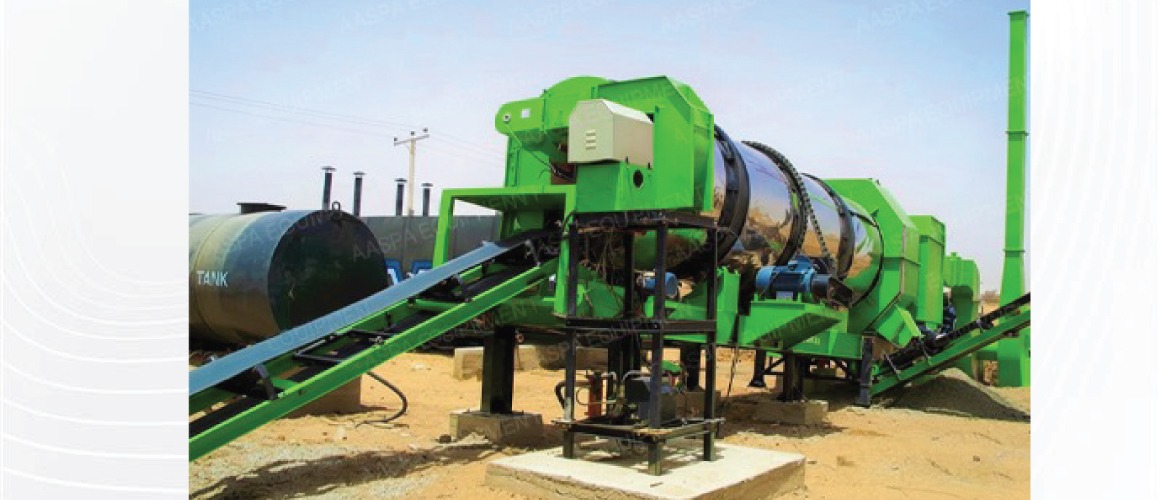
The global demand for asphalt drum mix plants is a significant area of study for understanding infrastructure development and the construction materials market. These plants are crucial for producing asphalt, a key component in road construction, paving, and various civil engineering projects. The market dynamics are influenced by several interconnected factors, ranging from economic growth to technological advancements and environmental regulations.
Understanding the Global Demand for Asphalt Drum Mix Plants
Asphalt drum mix plants are machines that produce hot mix asphalt by continuously drying and mixing aggregate with bitumen in a rotating drum. This process generates the material used to create durable, high-performance road surfaces. The global demand for these plants directly correlates with the need for new infrastructure and the maintenance of existing networks.
The Production Process and Plant Types
There are two primary types of asphalt mixing plants: batch plants and drum mix plants. While both produce asphalt, drum mix plants offer a continuous production process, often favored for large-scale projects due to their efficiency. The process involves feeding aggregates, often sand, gravel, and crushed stone, into one end of a rotating drum. As the aggregates tumble, they are dried by a hot air stream and then mixed with heated bitumen, which acts as a binder. The continuous flow allows for high volume output, making them suitable for extensive road networks.
Market Segmentation and Key Regions
The market for asphalt drum mix plants is segmented by plant type, capacity, and geographical region. High-capacity plants, often exceeding 150 tons per hour, are typically deployed in large-scale national infrastructure projects. Smaller, portable plants cater to localized needs or projects with limited access. Geographically, Asia-Pacific, North America, and Europe are significant markets, driven by differing stages of infrastructure development and urbanization rates. Emerging economies in Asia and Africa are experiencing rapid growth in infrastructure, driving substantial demand for new plants.
Factors Driving the Demand for Asphalt Drum Mix Plants Worldwide
Several macroeconomic and industry-specific factors contribute to the ongoing demand for asphalt drum mix plants. These factors act as the engine of growth, propelling the industry forward.
Infrastructure Development and Urbanization
Global infrastructure development is the primary driver. As nations develop, a robust transportation network becomes essential for economic growth, trade, and social connectivity. Roads, much like arteries, carry the lifeblood of an economy. Urbanization, particularly in developing countries, leads to increased demand for housing, commercial spaces, and supporting infrastructure like roads and highways. This expansion requires significant quantities of asphalt, directly translating to a need for more asphalt drum mix plants. Government initiatives and investments in infrastructure projects, such as national highway expansions or smart city developments, act as catalysts for demand.
Maintenance and Repair of Existing Infrastructure
The lifecycle of roads is finite. Wear and tear from traffic, weather, and environmental factors necessitate regular maintenance, repairs, and resurfacing. This ongoing need for upkeep ensures a steady, baseline demand for asphalt production, even in regions with well-established infrastructure networks. Think of it as a continuous patching cycle, where old asphalt is replaced with new. Modern road systems, while designed for longevity, still require periodic attention to maintain safety and efficiency.
Economic Growth and Trade
A strong global economy with increasing trade activities naturally translates to increased freight movement and passenger traffic. This growth places greater stress on existing road networks and necessitates the construction of new ones. Economic prosperity often corresponds with higher government spending on public works, including transportation infrastructure. Conversely, economic downturns can lead to reduced investment in these areas, impacting demand.
The Role of Asphalt Drum Mix Plants in Meeting Global Infrastructure Needs
Asphalt drum mix plants are not just machines; they are integral components in the global effort to build and maintain essential infrastructure. Their output is a fundamental building block for modern society.
Supporting Transportation Networks
Paved roads are fundamental to modern transportation systems. They facilitate the movement of goods, services, and people, connecting communities and markets. Without efficient asphalt production, the expansion and maintenance of these crucial networks would be severely hampered. Asphalt drum mix plants ensure a steady supply of this vital material, allowing for the construction of everything from local streets to intercontinental highways.
Facilitating Economic Activities
Reliable transportation infrastructure reduces transit times, lowers transportation costs, and improves access to markets. This, in turn, stimulates economic activity, makes regions more attractive for investment, and facilitates trade. Think of asphalt plants as the bedrock upon which economic activity flows. The ability to quickly and efficiently produce asphalt directly supports these economic engines.
Disaster Recovery and Reconstruction
In the aftermath of natural disasters, such as earthquakes, floods, or hurricanes, transportation infrastructure is often severely damaged. Asphalt drum mix plants play a critical role in recovery efforts, enabling the rapid reconstruction and repair of roads, bridges, and airfields, which are essential for humanitarian aid and rebuilding communities. Their mobility in some configurations allows for deployment to affected areas, accelerating the recovery process.
Emerging Markets and Opportunities for Asphalt Drum Mix Plants
|
Country |
Projected Road Construction Growth |
Opportunities for Asphalt Drum Mix Plants |
|
India |
8% annually |
High demand for new road construction |
|
China |
6% annually |
Government investment in infrastructure |
|
Brazil |
5% annually |
Expansion of road network |
|
Nigeria |
7% annually |
Increasing urbanization driving road development |
While established markets continue to present opportunities, emerging economies are often the primary drivers of new demand for asphalt drum mix plants. These regions are actively investing in foundational infrastructure.
Rapid Urbanization in Developing Regions
Countries in Southeast Asia, Africa, and parts of Latin America are experiencing rapid urbanization. This demographic shift necessitates new housing, commercial centers, and critically, the associated transportation infrastructure. Governments in these regions are often undertaking ambitious infrastructure projects, creating significant demand for asphalt production capabilities. This is where the seed of infrastructure growth is currently being sown.
Government Investment in Infrastructure Projects
Many developing nations are implementing extensive national infrastructure plans to catalyze economic growth and improve living standards. These plans often include massive road construction and expansion projects, directly boosting the demand for asphalt drum mix plants. International development banks and foreign direct investment also play a role in funding these initiatives, further fueling the market.
China’s Belt and Road Initiative
China’s Belt and Road Initiative (BRI) is a monumental infrastructure development strategy impacting numerous countries across Asia, Europe, and Africa. A significant portion of this initiative involves road construction and railway networks, creating substantial opportunities for asphalt drum mix plant manufacturers and suppliers in participating nations. This initiative acts as a massive pipeline of projects, feeding demand for construction equipment.
Innovations and Advancements in Asphalt Drum Mix Plant Technology
The asphalt drum mix plant industry is not static; continuous innovation is leading to more efficient, environmentally friendly, and adaptable plants.
Energy Efficiency and Fuel Optimization
Manufacturers are focusing on improving energy efficiency to reduce operational costs and environmental impact. This includes optimizing burner designs for complete fuel combustion, using advanced insulation materials, and integrating waste heat recovery systems. These advancements aim to reduce the plant’s overall carbon footprint, a critical consideration in today’s climate-conscious world.
Automation and Digital Control Systems
Modern asphalt drum mix plants increasingly feature sophisticated automation and digital control systems. These systems allow for precise control over the mixing process, aggregate heating, and bitumen dosage, leading to higher quality asphalt and reduced material waste. Operators can monitor and adjust parameters in real-time, improving efficiency and consistency, much like a meticulous chef adjusting ingredients.
Environmental Emission Control Technologies
With stricter environmental regulations globally, significant advancements have been made in emission control. Bag filters, scrubbers, and other dust collection systems are standard features, reducing particulate matter and other air pollutants. The use of alternative fuels and lower working temperatures also contributes to a cleaner operation, making plants more compatible with environmental sustainability goals.
Use of Recycled Asphalt Pavement (RAP)
The integration of recycled asphalt pavement (RAP) in new asphalt mixes is a key innovation. Modern drum mix plants are designed to efficiently process and incorporate RAP, reducing the demand for virgin aggregates and bitumen, lowering costs, and minimizing waste. This circular economy approach is becoming increasingly important for sustainable construction practices.
Challenges and Considerations in the Global Asphalt Drum Mix Plant Market
Despite the opportunities, the global asphalt drum mix plant market faces several challenges that can impact growth and operations.
Volatility in Material Prices
The cost of key raw materials, primarily bitumen and aggregates, is subject to global price fluctuations. Bitumen prices are tied to crude oil prices, which can be highly volatile. These fluctuations can impact the profitability of asphalt production and, consequently, the demand for new plants. This volatility introduces an element of unpredictability for manufacturers and operators.
Environmental Regulations and Compliance
Increasingly stringent environmental regulations regarding emissions, noise pollution, and waste disposal pose challenges for asphalt drum mix plant manufacturers and operators. Compliance requires investment in advanced technologies and adherence to strict operational protocols, which can increase operational costs. Navigating this regulatory landscape is like walking a tightrope.
Skilled Labor Shortages
Operating and maintaining sophisticated asphalt drum mix plants requires skilled labor, including engineers, technicians, and operators. A shortage of qualified personnel in many regions can impact plant efficiency, lead to operational downtime, and increase labor costs. Attracting and retaining skilled workers is a critical concern for the industry.
Competition and Market Saturation
The global market for asphalt drum mix plants is competitive, with numerous domestic and international manufacturers. In some established markets, there can be a degree of saturation, leading to price pressure and a need for differentiation through technological advancement or enhanced after-sales service. Manufacturers must constantly innovate to stay ahead.
Sustainable Practices and Environmental Impact of Asphalt Drum Mix Plants
The environmental impact of asphalt production is a crucial consideration, and the industry is moving towards more sustainable practices.
Reducing Emissions and Air Pollution
As previously mentioned, modern plants incorporate advanced emission control technologies such as baghouses and scrubbers to capture particulate matter and reduce harmful gas emissions. The industry is also exploring alternative, cleaner fuels and optimizing combustion processes to minimize the environmental footprint.
Energy Conservation and Efficiency
Manufacturers are focusing on designing plants that consume less energy. This involves optimizing the drying process, improving insulation, and implementing intelligent control systems to manage energy usage effectively. Reducing energy consumption not only lowers operational costs but also lessens reliance on fossil fuels.
Waste Management and Recycling
The use of recycled asphalt pavement (RAP) is a cornerstone of sustainable asphalt production. By incorporating RAP, plants reduce the amount of virgin material needed, conserve natural resources, and minimize landfill waste. Efforts are also being made to recycle other construction and demolition waste into asphalt mixes.
Noise Reduction and Site Management
Modern plants are designed with features to reduce noise pollution, particularly important for plants located near residential areas. Effective site management practices, including dust suppression and responsible material handling, also contribute to minimizing the environmental impact of operations. The goal is to be a quiet and respectful neighbor in the industrial landscape.
FAQs
- What are Asphalt Drum Mix Plants?
Asphalt Drum Mix Plants are a type of asphalt plant that produce hot mix asphalt in a continuous process. They are widely used in the construction of roads, highways, and other infrastructure projects.
- What factors are driving the global demand for Asphalt Drum Mix Plants?
The global demand for Asphalt Drum Mix Plants is being driven by the increasing investment in infrastructure development, urbanization, and the need for road maintenance and rehabilitation. Additionally, the growing focus on sustainable and eco-friendly construction practices is also contributing to the demand for these plants.
- What role do Asphalt Drum Mix Plants play in meeting global infrastructure needs?
Asphalt Drum Mix Plants play a crucial role in meeting global infrastructure needs by providing a reliable and efficient way to produce high-quality asphalt for the construction and maintenance of roads, highways, airports, and other infrastructure projects. They are essential for ensuring the smooth and safe movement of people and goods.
- What are the emerging markets and opportunities for Asphalt Drum Mix Plants?
Emerging markets for Asphalt Drum Mix Plants include countries in Asia, Africa, and Latin America, where rapid urbanization and infrastructure development are driving the demand for high-quality asphalt. Opportunities also exist in developed countries for the replacement and upgrade of aging asphalt plants.
- What are the sustainable practices and environmental impact of Asphalt Drum Mix Plants?
Sustainable practices in Asphalt Drum Mix Plants include the use of recycled materials, energy-efficient technologies, and the reduction of emissions. While these plants can have environmental impacts, advancements in technology and the adoption of best practices are helping to minimize their footprint and promote sustainability.