
AI & Robotics in Road Sweeping & Paving Machines
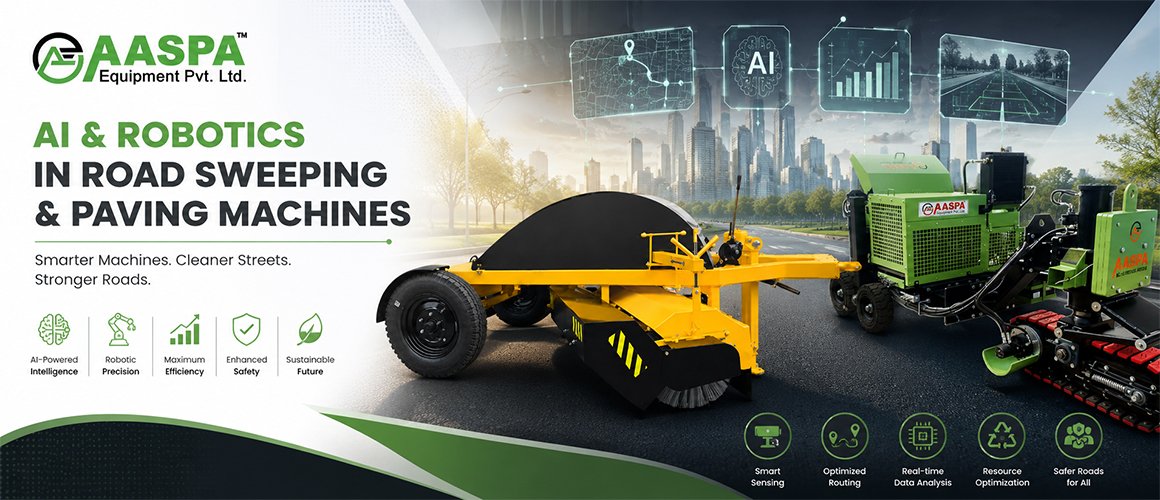
Thinking about those big machines that clear our streets and smooth out our roads? You’ve probably seen them in action. They’ve been around for ages, doing a tough, important job. But what’s happening behind the scenes, or rather, inside the machines? Well, a lot is changing, thanks to AI and robotics. Briefly, AI and robots are making road sweeping and paving machines smarter, more efficient, and safer, leading to better roads and less disruption.
The Rise of the Intelligent Machine: Sweeping and Paving Gets an Upgrade
It’s not just about bigger brushes or stronger pressure washers anymore. The way we maintain our roads is undergoing a significant transformation, and artificial intelligence (AI) paired with robotics is at the heart of it. Instead of operators relying solely on their experience and a set of predetermined routes, these new machines are equipped with the ability to ‘see,’ ‘think,’ and ‘act’ with an unprecedented level of precision. This isn’t science fiction; it’s the reality of modern infrastructure maintenance.
Seeing the Road: How AI Perceives the Environment
Think of it like giving these machines eyes. AI-powered road sweeping and paving machines use a suite of sensors, including cameras, LiDAR (Light Detection and Ranging), and radar. These sensors don’t just map the terrain; they identify specific issues. For sweeping, this means distinguishing between valuable objects and actual debris, or even identifying areas with high concentrations of litter. For paving, it allows machines to detect subtle variations in the existing road surface that might require different treatment.
From Reactive to Proactive: Identifying Issues Before They Worsen
One of the most impactful shifts is from a reactive approach to a proactive one. Instead of waiting for a pothole to become a chasm, AI can analyze sensor data to predict potential problem areas. It can identify cracks that are likely to expand, or areas where the pavement is showing signs of wear under stress. This foresight allows for targeted repairs, preventing minor issues from snowballing into costly and disruptive major ones.
Precision in Action: The Robotic Advantage
Robotics takes the ‘eyes’ provided by AI and translates them into actions with incredible accuracy. Robotic arms can adjust brush pressure, nozzle angles, or even the depth of asphalt being laid with superhuman consistency. This means less wasted material, a more uniform finish, and ultimately, roads that last longer.
Uniformity is Key: Perfect Paving Every Time
For paving, consistency is everything. Robotic systems can ensure that the asphalt is spread at precisely the right temperature and thickness across the entire surface. This eliminates the weak spots that can form when manual spreading isn’t perfectly uniform, leading to a more durable and smoother road.
AI’s Efficiency Boost: Doing More with Less
The introduction of AI isn’t just about making machines smarter; it’s fundamentally about making them work smarter and more efficiently. This translates into significant benefits for municipalities, contractors, and the public alike.
Optimizing Routes and Schedules: Smarter Planning for Sweeping
For road sweeping, AI can analyze traffic patterns, historical data on litter accumulation, and even weather forecasts to create dynamic sweeping schedules. Instead of sweeping every street at the same time regardless of need, AI can direct machines to areas that require immediate attention or to optimize routes to avoid peak traffic hours, minimizing disruption.
Data-Driven Decisions: Knowing Where and When to Sweep
This data-driven approach means that resources can be deployed more effectively. If a particular park is experiencing a surge in visitors and therefore more litter, the AI can prioritize sweeping that area. Similarly, if a storm is predicted, the system can reroute sweepers to clear storm drains proactively.
Material Management: Minimizing Waste in Paving
In paving, AI optimizes the use of materials. By precisely measuring and dispensing asphalt, the system reduces over-application, which is both wasteful and can lead to premature road degradation. It can also adjust the mix of materials based on real-time road conditions, ensuring optimal performance and longevity.
Just Enough, Just Right: Efficient Material Deployment
This precision also extends to temperature control for asphalt. Overheated asphalt can degrade quickly, while underheated asphalt won’t bond properly. AI maintains the ideal temperature throughout the laying process, ensuring a quality finish and maximizing the lifespan of the pavement.
Safety First: AI and Robotics as a Protective Shield
Road work inherently involves risks. From navigating busy traffic to the operation of heavy machinery, the safety of workers and the public is paramount. AI and robotics offer a significant step forward in mitigating these risks.
Reducing Human Exposure: Keeping Workers Out of Harm’s Way
Robotic systems can take on the most hazardous tasks. Imagine a robot arm that can safely operate near active traffic lanes or in areas with poor visibility, performing sweeping or minor repair tasks without placing a human operator in direct danger. This significantly reduces the risk of accidents.
Remote Operation and Automation: Minimizing Direct Contact
Many AI-powered machines can be operated remotely or perform tasks autonomously. This means fewer workers are needed to be physically present in potentially dangerous zones, especially during complex or lengthy operations like overnight paving.
Enhancing Public Safety: Smoother Roads, Fewer Hazards
Beyond worker safety, these advanced machines contribute to public safety by creating better-maintained roads. Smoother, more uniform surfaces mean fewer jolts for drivers, reduced wear and tear on vehicles, and a decrease in accidents caused by potholes, uneven patches, or debris on the road.
AI-Powered Hazard Detection: Alerting Drivers to Dangers
Some systems can even communicate with other connected infrastructure or vehicles to alert them to ongoing work or temporary hazards. While still in its early stages, the potential for AI to proactively warn drivers of unexpected road conditions is immense.
Innovations on the Horizon: The Cutting Edge of Road Maintenance
|
Technology |
Application |
Benefits |
|
Self-healing concrete |
Repairing cracks in roads |
Extended road lifespan, reduced maintenance costs |
|
Solar-powered roadways |
Generating electricity, melting snow, displaying road markings |
Renewable energy source, improved visibility, reduced snow removal costs |
|
Smart pavement |
Monitoring road conditions, detecting traffic flow |
Early detection of maintenance needs, improved traffic management |
|
Recycled materials |
Using recycled plastic or rubber in road construction |
Reduced environmental impact, cost-effective road building |
The current advancements are just the beginning. The pace of innovation in AI and robotics is rapid, and we can expect to see even more sophisticated applications in the realm of road sweeping and paving.
Autonomous Fleets: The Future of Street Cleaning
Picture entire fleets of autonomous street sweepers working in coordinated patterns, communicating with each other and with traffic management systems to optimize their routes and minimize their impact on communities. This level of automation could lead to significantly cleaner cities and a more efficient allocation of resources.
Swarming Robots: Collaborative Cleaning Power
The concept of ‘swarming’ robots, where multiple smaller units work together on a task, could also be applied to road sweeping. These smaller, agile robots could navigate tighter spaces and address localized debris more effectively than a single large machine.
Deeper Predictive Maintenance: Beyond Potholes
AI’s predictive capabilities will likely extend beyond immediate repairs. By analyzing long-term data on road usage, weather patterns, and material composition, AI could help forecast the lifespan of different road sections, allowing for more strategic and long-term maintenance planning.
Digital Twins for Roads: Virtual Road Management
The concept of a ‘digital twin’ – a virtual replica of a physical road – could revolutionize how we manage infrastructure. AI could constantly update this digital twin with real-time sensor data, allowing engineers to simulate the impact of different maintenance strategies or predict failure points long before they occur in the real world.
Advanced Paving Techniques: Tailored Road Surfaces
Future paving machines might be capable of creating highly customized road surfaces. AI could analyze traffic volume, load types, and environmental conditions to adjust the asphalt mix and laying technique on the fly, creating roads that are not only durable but also tailored to their specific environment and usage.
Environmental and Sustainability Gains: A Greener Approach to Roadwork
The drive towards sustainability is impacting every industry, and road maintenance is no exception. AI and robotics are playing a crucial role in making these essential services more eco-friendly.
Reduced Emissions: Smarter Fuel Consumption
By optimizing routes and machine operation, AI-powered sweepers and pavers can consume less fuel. Smoother operation, less idling, and more efficient workflows all contribute to a lower carbon footprint.
Electrification and Hybridization: Cleaner Powertrains
The integration of AI and robotics also facilitates the adoption of electric and hybrid powertrains in these machines. Smarter energy management, often controlled by AI, can maximize the efficiency of these cleaner alternatives, reducing reliance on fossil fuels.
Material Conservation: Less Waste, More Reuse
As mentioned earlier, precision in material application directly reduces waste. Furthermore, AI can help analyze existing road materials to determine the optimal approach for recycling or repurposing them, contributing to a more circular economy in construction.
Recycled Materials Optimization: Smart Infrastructure
AI can analyze the properties of recycled asphalt or other materials, ensuring they are used effectively and meet quality standards. This moves us away from solely relying on virgin materials and towards a more sustainable approach to road construction and repair.
The road ahead for road sweeping and paving machines is undeniably intelligent and robotic. These technologies are not just incremental improvements; they represent a fundamental shift in how we build and maintain the arteries of our communities. As AI and robotics continue to evolve, we can anticipate smoother, safer, and more sustainable journeys for everyone.
FAQsss
- What is the role of robotics in road sweeping and paving machines?
Robotics play a crucial role in road sweeping and paving machines by automating repetitive tasks, increasing efficiency, and improving precision in road maintenance processes. This technology allows for more consistent and thorough cleaning and paving of roads, ultimately leading to better infrastructure quality.
- How does AI impact efficiency and precision in road sweeping and paving machines?
AI enhances efficiency and precision in road sweeping and paving machines by enabling real-time data analysis, predictive maintenance, and autonomous decision-making. This results in optimized route planning, reduced downtime, and improved accuracy in cleaning and paving operations.
- What are the innovations in road sweeping and paving machines that integrate AI technology?
Innovations in road sweeping and paving machines integrating AI technology include autonomous navigation systems, sensor-based monitoring for detecting debris and road conditions, machine learning algorithms for predictive maintenance, and adaptive control systems for optimizing performance based on environmental factors.
- What is the future of road maintenance with AI-powered road sweeping and paving machines?
The future of road maintenance with AI-powered machines involves increased automation, improved sustainability, and enhanced safety. AI technology will continue to drive advancements in road maintenance by enabling proactive maintenance, reducing environmental impact, and enhancing worker safety.
- How is AI revolutionizing road sweeping and paving machines and what are the challenges in this intersection of AI and robotics in road maintenance?
AI is revolutionizing road sweeping and paving machines by enabling autonomous operation, data-driven decision-making, and continuous improvement through machine learning. However, challenges in this intersection include the need for robust AI algorithms, addressing ethical considerations, and ensuring seamless integration with existing infrastructure and regulations.