
How Automation in Asphalt Plants Reduces Operating Cost
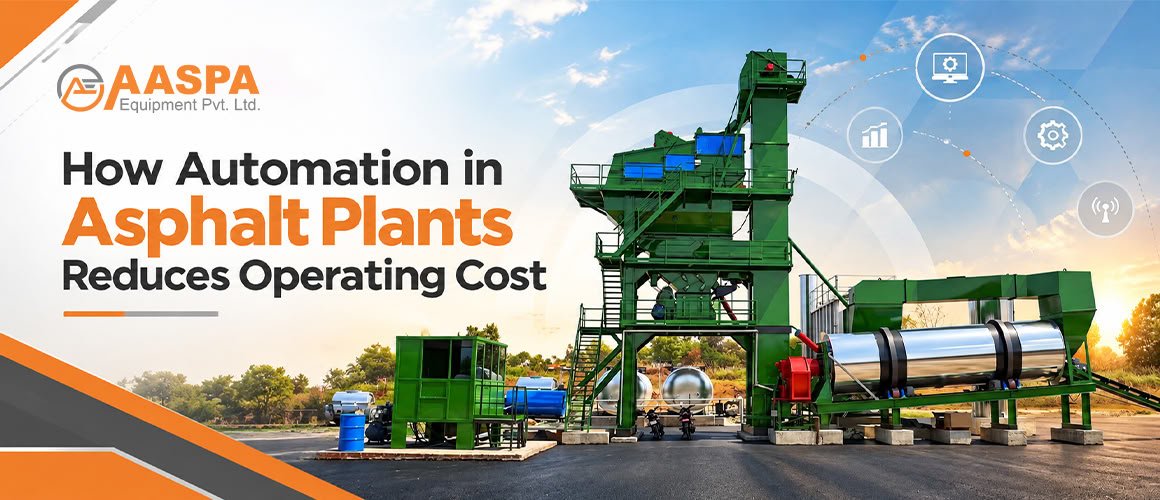
Discover how asphalt plant automation reduces operating costs through precise dosing, fuel control, lower material waste and efficient production.
The relentless pursuit of efficiency and cost-effectiveness has become a cornerstone of modern industrial operations, and the asphalt production sector is no exception. In an industry traditionally reliant on manual labor and often characterized by variable output, the integration of automation technologies has emerged as a transformative force. This article delves into the profound impact of automation in asphalt plants, meticulously examining its role in reducing operating costs, enhancing overall efficiency, and delivering a myriad of tangible benefits that extend from production quality to workplace safety.
The Pivotal Role of Automation in Enhancing Asphalt Plant Efficiency
The core objective of any asphalt plant is to produce high-quality asphalt mix consistently and cost-effectively. Automation directly addresses this by streamlining complex processes, eliminating human error, and optimizing resource utilization. By replacing manual interventions with precise, repeatable machine actions, automation ensures a level of consistency that is difficult to achieve otherwise.
Precise Batching and Mixing for Optimal Performance
One of the most critical aspects of asphalt production is the accurate proportioning of aggregates, bitumen, and additives. Traditionally, this was a manual process, susceptible to inconsistencies arising from human judgment, fatigue, or simple errors. Automated batching systems, however, employ sophisticated load cells and computer-controlled valves to measure and dispense materials with extraordinary precision. This exactitude ensures that each batch conforms perfectly to the specified mix design, preventing costly deviations and rework. The consistency achieved through automated batching translates directly into a higher quality final product, which is essential for meeting stringent road construction specifications and minimizing premature pavement failures. Moreover, precise control over material flow minimizes over-batching of expensive components like bitumen, leading to significant material cost savings over time. The entire mixing process, from the charging of aggregates to the final discharge, can be synchronized and monitored by a central control system, allowing for real-time adjustments and optimal mixing times, further enhancing efficiency.
Real-time Monitoring and Data-Driven Optimization
Beyond basic control, modern automation systems incorporate advanced sensors and data acquisition capabilities. These systems continuously monitor critical parameters such as temperature, flow rates, pressure, and even environmental conditions. This deluge of real-time data is then processed and analyzed by sophisticated software, providing plant operators with an unprecedented level of insight into their operations. This data isn’t merely descriptive; it’s prescriptive. It allows operators to identify inefficiencies, detect potential equipment malfunctions before they escalate, and make informed decisions to optimize production. For instance, if a temperature deviation is detected in the dryer, the automated system can automatically adjust burner settings to bring it back within the optimal range, preventing energy waste and ensuring proper aggregate drying. The historical data also becomes a valuable resource for long-term trend analysis, allowing plant managers to identify areas for continuous improvement and fine-tune their operational strategies. This data-driven approach moves asphalt production from a reactive model to a proactive one, where problems are anticipated and prevented rather than merely reacted to.
Key Benefits of Automation for Asphalt Production
The advantages of integrating automation into asphalt production extend far beyond mere operational efficiency, encompassing significant financial, quality, and environmental benefits. These advantages collectively contribute to a more robust and sustainable business model for asphalt manufacturers.
Enhanced Product Quality and Consistency
As previously mentioned, the precise control offered by automation is paramount to achieving consistently high-quality asphalt. The automated systems remove the variability inherent in manual operations, ensuring that every batch of asphalt meets the exact specifications. This consistency is crucial for road builders, as it contributes to the longevity and performance of the final pavement. A uniform mix minimizes the risk of segregation, allows for better compaction, and ultimately results in a more durable road surface, reducing future maintenance costs for infrastructure owners. The ability to consistently produce a superior product also strengthens the plant’s reputation and competitive standing within the market, attracting more demanding projects that require unwavering quality.
Increased Production Output and Throughput
By automating repetitive tasks and optimizing process flows, asphalt plants can significantly increase their production capacity without necessarily expanding their physical footprint or increasing their workforce proportionally. Automated systems can operate continuously for extended periods, limited only by routine maintenance schedules, unlike human operators who require breaks and are subject to fatigue. The seamless coordination of different plant components, orchestrated by the automation system, minimizes bottlenecks and ensures a steady, uninterrupted flow of materials. This increased throughput allows plants to meet higher demand, fulfill larger contracts, and ultimately generate greater revenue. The ability to rapidly switch between different mix designs with minimal downtime further enhances overall production flexibility and responsiveness to market demands.
Optimized Energy Consumption
Energy is a significant operating cost for any asphalt plant, particularly for heating aggregates and bitumen. Automation plays a critical role in optimizing energy consumption by precisely controlling burner operations, optimizing dryer efficiency, and minimizing heat loss. Automated systems can adjust burner output based on real-time aggregate moisture content and desired temperature, preventing over-drying or under-drying, both of which are energy-intensive. Furthermore, intelligent control systems can manage the sequencing of different plant components to minimize idle times, where energy is consumed without producing asphalt. For example, a system might anticipate the demand for hot aggregate and pre-heat the dryer only when necessary, rather than maintaining a constant high temperature. This meticulous control over energy-intensive processes translates directly into substantial savings on fuel and electricity bills, contributing significantly to the plant’s profitability.
Reducing Labor Costs Through Advanced Plant Automation
The impact of automation on labor costs is one of the most compelling arguments for its adoption in asphalt plants. While the initial investment in automation technology can be substantial, the long-term savings in labor expenses often provide a compelling return on investment.
Streamlined Operations and Reduced Staffing Needs
Automation fundamentally redesigns the operational workflow, often consolidating multiple manual tasks into automated sequences controlled by a central system. This streamlining reduces the need for constant human intervention in various stages of the production process. For example, automated aggregate handling, bitumen delivery, and mix discharge systems significantly diminish the requirement for manual labor in these areas. While some skilled personnel are still needed for supervision, maintenance, and complex troubleshooting, the overall number of operators required to run the plant can be substantially reduced. This reduction in direct labor costs, including wages, benefits, and training, represents a significant ongoing saving for the plant.
Minimizing Human Error and Associated Costs
Human error, though an inherent part of any manual process, can be extremely costly in an asphalt plant. Incorrect batching, improper temperature settings, or missed maintenance checks can lead to wasted materials, off-spec product, equipment damage, and even safety incidents. Automated systems, by their very nature, are designed to perform tasks repeatedly and precisely without succumbing to fatigue or distraction. They execute pre-programmed instructions with unwavering accuracy, virtually eliminating errors related to manual operation. This reduction in errors translates directly into savings by minimizing material waste, preventing costly rework, avoiding equipment damage, and reducing the likelihood of expensive warranty claims or penalties for non-compliant product. The consistency and reliability of automated processes free up human operators to focus on higher-level tasks such as strategic planning, system optimization, and preventative maintenance, further enhancing overall plant efficiency.
How Automation Minimizes Material Waste in Asphalt Plants
|
Metric |
Without Automation |
With Automation |
Impact of Automation |
|
Material Waste Percentage |
8-12% |
2-4% |
Reduction by up to 75% |
|
Batch Consistency |
±5% |
±1% |
Improved accuracy by 80% |
|
Overproduction Rate |
10% |
3% |
Reduced overproduction by 70% |
|
Rework Material Usage |
15% |
5% |
Lowered rework by 66% |
|
Energy Consumption per Ton |
Variable, higher due to waste |
Consistent, optimized |
Energy savings due to less waste |
|
Real-time Monitoring & Adjustments |
No |
Yes |
Enables immediate correction to minimize waste |
Material waste represents a direct financial loss for asphalt producers. Every kilogram of aggregate or liter of bitumen that is incorrectly processed, spoiled, or discarded due to inefficiencies directly impacts the bottom line. Automation provides powerful tools to combat this waste.
Precision Dosing and Recipe Management
As discussed earlier, automated batching systems ensure precise dosing of all components according to the specified mix design. This eliminates the common issue of over-batching expensive materials like bitumen, which can occur with manual systems as a safety margin. By dispensing only the exact required quantities, material waste from excess usage is virtually eliminated. Furthermore, sophisticated automation systems allow for centralized recipe management, ensuring that the correct proportions are always used and making it easy to switch between different mix designs with minimal material loss during transitions. The system can even track material consumption against production, highlighting any discrepancies that might indicate waste or calibration issues.
Reduced Off-Spec Product and Rework
A significant source of material waste is the production of off-spec asphalt that does not meet quality requirements. This material often has to be either discarded, reprocessed (which is energy and time-intensive), or sold at a discount, all of which incur financial losses. Automation, through its consistent control over temperatures, mixing times, and component ratios, drastically reduces the likelihood of producing off-spec material. The continuous monitoring and real-time adjustments ensure that the production process stays within acceptable parameters, minimizing deviations that could lead to unusable product. This reduction in off-spec batches translates directly into savings from avoided material waste and the associated costs of reprocessing or disposal.
Improving Plant Safety and Maintenance with Automation Technology
Beyond economic benefits, automation significantly contributes to creating a safer working environment and optimizing maintenance practices within asphalt plants, leading to a more reliable and resilient operation.
Enhanced Workplace Safety
Asphalt plants, with their hot materials, heavy machinery, and complex processes, inherently pose safety risks. Automation helps mitigate these risks by reducing the need for human interaction with dangerous equipment and processes. For instance, automated material handling systems can transport hot asphalt and aggregates, minimizing the risk of burns or injuries from manual lifting and maneuvering. Remote monitoring and control capabilities allow operators to oversee the entire plant from a safe, climate-controlled control room, reducing their exposure to noise, dust, and extreme temperatures. Automated safety interlocks and emergency shutdown systems are integral to modern automation, immediately stopping operations if a dangerous condition is detected, preventing accidents and protecting personnel. The consistent and predictable operation of automated machinery also reduces the chance of unexpected movements or malfunctions that could lead to injuries.
Predictive and Preventative Maintenance Schedules
Traditional maintenance often follows a reactive model, where repairs are conducted only after a component fails, leading to costly downtime and emergency repairs. Automation facilitates a shift towards predictive and preventative maintenance. Modern automation systems integrate diagnostic tools and sensors that continuously monitor the health and performance of critical plant components, such as motors, bearings, and conveyors. These sensors can detect subtle changes in vibration, temperature, or current draw that may indicate impending failure. The automation system can then alert maintenance personnel to these anomalies, allowing them to schedule proactive repairs or replacements during planned downtime, before a catastrophic failure occurs. This approach minimizes unscheduled downtime, extends the lifespan of equipment, and reduces the overall cost of maintenance by preventing minor issues from escalating into major problems. Data collected over time can also be used to optimize maintenance schedules and identify components that require more frequent attention, further enhancing the plant’s operational reliability.
Long-Term Cost Savings Achieved by Automating Asphalt Operations
The cumulative effect of reduced operating costs, enhanced efficiency, minimized waste, and improved safety translates into substantial long-term cost savings for asphalt producers who embrace automation.
Reduced Operational Expenses Over Time
The initial investment in automation technology can be considerable, but the long-term operational savings quickly justify this expenditure. The combination of lower energy consumption, reduced material waste, and optimized labor utilization creates a leaner and more cost-effective production model. These ongoing savings compound over the lifespan of the plant, significantly improving profitability margins. Furthermore, the ability to produce a higher quality product consistently reduces the likelihood of costly rework, warranty claims, and customer dissatisfaction, all of which represent hidden costs in traditional operations. The improved control and predictability offered by automation also enable better financial forecasting and budget management.
Enhanced Competitive Advantage and Market Position
In an increasingly competitive market, the ability to produce high-quality asphalt at a lower cost provides a distinct competitive advantage. Automated plants can offer more competitive pricing while maintaining healthy profit margins, or they can invest those savings into further technological advancements and research. The reliability and consistency of an automated plant also build a strong reputation for quality and dependability, attracting more lucrative projects and strengthening customer relationships. This enhanced market position, driven by superior operational efficiency and product quality, positions the automated asphalt plant for sustained growth and profitability in the long run. The adaptability of automated systems also allows plants to respond quickly to changes in market demand or new product specifications, ensuring they remain relevant and competitive in a dynamic industry.
FAQs
- What is the primary role of automation in asphalt plants?
Automation in asphalt plants primarily enhances operational efficiency by streamlining production processes, reducing manual intervention, and optimizing resource use. This leads to improved consistency in asphalt quality and faster production rates.
- How does automation help in reducing operating costs in asphalt production?
Automation reduces operating costs by minimizing labor requirements, decreasing material waste through precise control systems, and lowering energy consumption. It also reduces downtime by enabling predictive maintenance and quicker troubleshooting.
- In what ways does automation improve safety in asphalt plants?
Automation improves safety by limiting the need for workers to be in hazardous areas, automating dangerous tasks, and providing real-time monitoring of plant conditions. This reduces the risk of accidents and enhances overall workplace safety.
- Can automation reduce material waste in asphalt production? If so, how?
Yes, automation reduces material waste by using advanced sensors and control systems to accurately measure and mix raw materials. This precision prevents overuse or underuse of materials, ensuring optimal batch quality and minimizing excess waste.
- What are the long-term benefits of automating asphalt plant operations?
Long-term benefits include sustained cost savings through reduced labor and material expenses, improved plant reliability and uptime, enhanced product quality, and better compliance with environmental and safety regulations. Automation also facilitates easier scalability and adaptability to changing production demands.