
Fuel Price Fluctuations & Their Impact on Road Equipment Costs
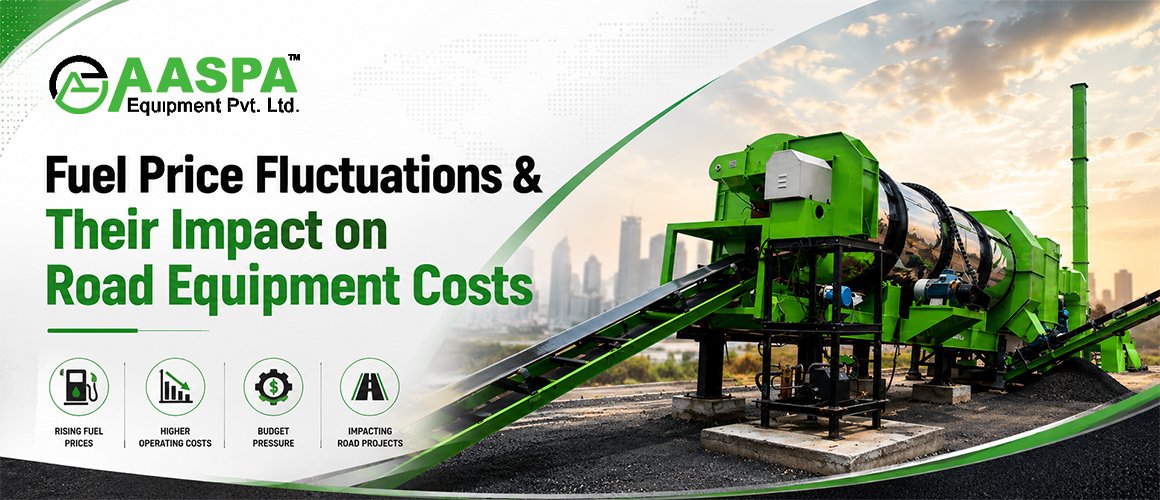
Fuel prices seem to be all over the place these days, and if you’re involved with road equipment, you’ve probably noticed that it’s not just your personal gas tank feeling the pinch. Those ups and downs at the pump have a real, tangible effect on the cost of keeping our roads maintained and built. Let’s break down how these fuel price swings ripple through the world of road equipment.
- Why Fuel Prices Matter So Much for Road Work
It’s pretty straightforward when you think about it. Most of the heavy machinery used in road construction and maintenance – think excavators, pavers, rollers, dump trucks – run on diesel fuel. This isn’t a small, occasional expense; it’s a significant portion of their operating cost. When diesel prices spike, the cost to power these machines goes up, plain and simple.
- The Direct Drain on Operations
When fuel costs rise, the immediate consequence is a higher bill for every hour a piece of equipment is running. This isn’t just about filling up the tank. It’s about the constant need for fuel to keep the engines churning, the hydraulics moving, and the entire operation going. A significant increase in diesel can quickly eat into project budgets, especially for long-term projects where fuel consumption is substantial.
- Fuel as a Primary Operating Expense
For many road construction companies, fuel isn’t just another line item; it’s often one of the top two or three operating expenses, right up there with labor and materials. This means any volatility in fuel prices has a proportionally large impact on the bottom line.
- The Chain Reaction of Indirect Costs
It’s not just the fuel itself. Higher fuel prices affect the cost of transporting materials like asphalt, gravel, and concrete. These materials also need to be moved by trucks, which run on diesel. So, even if your equipment isn’t directly burning as much fuel, the cost of getting the stuff you need to build roads goes up too.
- Understanding the Ripple Effect on Equipment Budgets
When fuel prices are unpredictable, it throws a wrench into the budgeting process for road equipment. Projects that were meticulously planned based on certain fuel cost assumptions can quickly become more expensive than anticipated. This forces project managers and procurement teams to be more agile and adapt their financial strategies.
- Budgeting Challenges in Volatile Times
Imagine you’ve got a big road resurfacing project lined up. You’ve calculated the fuel costs based on the average price of diesel over the last year. Then, suddenly, geopolitical events or supply chain issues cause diesel prices to jump 20% or more. That initial budget is now significantly off, and you have to find that extra money somewhere.
- The Difficulty of Accurate Forecasting
Accurate forecasting is crucial for any business, but it’s particularly challenging when a key variable like fuel price is so volatile. This can lead to underestimation of costs, project delays due to lack of funds, or having to make difficult trade-offs in other areas of the project.
- Impact on Bidding and Contract Negotiations
For contractors bidding on public works projects, fluctuating fuel prices create a significant risk. If they bid too low, assuming stable fuel costs, they could lose money. If they bid too high to account for potential spikes, they might not win the bid. This uncertainty can strain contract negotiations and make it harder to secure profitable work.
- The Cost of “Downtime” Due to Fuel
Sometimes, when fuel prices spike dramatically, companies might consider reducing equipment usage to save money. However, this can lead to project delays, which themselves incur costs. Idle equipment still needs maintenance, and delays can result in penalties or lost opportunities for future work.
- Balancing Fuel Costs with Project Timelines
There’s a constant balancing act between minimizing fuel expenditure and keeping projects on schedule. Shutting down operations to wait for fuel prices to drop might seem like a good idea in theory, but in practice, it can have far more damaging consequences for the overall project and the business.
- Strategies for Mitigating the Impact
So, what can be done to lessen the sting of these fluctuating fuel prices? It’s not about eliminating the problem entirely, as fuel prices are largely outside of an individual company’s control, but rather about smart management and proactive planning.
- Analyzing the Effects on Different Aspects of Road Work
|
Aspect |
Metrics |
|
Traffic Flow |
Number of vehicles passing per hour |
|
Accidents |
Number of reported accidents before and after road work |
|
Travel Time |
Average time taken to travel through the construction zone |
|
Air Quality |
Measurements of air pollutants during and after road work |
|
Cost |
Total expenses incurred for the road work |
The impact of fuel price fluctuations isn’t uniform across all areas of road work. Some activities are more sensitive than others, and the scale of the operation also plays a role.
- Impact on Asphalt Paving and Compaction
Asphalt paving requires continuous operation of paver machines and rollers, both of which are fuel-intensive. The cost of hauling hot mix asphalt to the site also adds to the fuel expense. When fuel prices rise, the cost of laying asphalt directly increases, which can lead to higher bids for resurfacing projects.
- The Energy-Intensive Nature of Asphalt Production
The production of asphalt itself is an energy-intensive process, and while that’s not directly fuel used by road equipment, it’s part of the overall material cost that is influenced by energy prices.
- Continuous Operation of Pavers and Rollers
These machines are designed to work continuously to ensure a smooth finish. Any interruption or extended operation directly translates to higher fuel consumption.
- The Role of Heavy Haulage and Transportation
Moving large pieces of road equipment, raw materials like aggregate and asphalt, and waste materials all rely on heavy-duty trucks. The cost of operating these trucks is heavily tied to diesel prices. Therefore, any increase in fuel cost directly impacts the logistics and overall cost of a road project.
- Fuel Consumption of Dump Trucks and Support Vehicles
From hauling aggregate to disposing of debris, dump trucks are constantly on the move. Their fuel consumption is a significant factor in project costs, especially when they are traveling long distances.
- The Cost of Transporting Specialized Equipment
When large excavators or pavers need to be moved from one site to another, specialized haulage trucks are used. The fuel required for these long-distance transports can be substantial.
- Maintenance and Repair Costs
While not as direct as fuel consumption, fuel price fluctuations can indirectly affect maintenance and repair costs. For example, if companies are struggling with higher fuel bills, they might defer some non-critical maintenance to save money, potentially leading to more significant repair needs down the line. Additionally, the cost of lubricants and other fluids used in equipment might also be influenced by energy prices.
- The Interplay Between Fuel Costs and Maintenance Budgets
When budgets are squeezed due to high fuel prices, maintenance often becomes a casualty. This can lead to a vicious cycle of increased breakdowns and higher repair bills.
- Potential for Increased Wear and Tear Due to Cost-Saving Measures
If operators are trying to conserve fuel by operating machinery differently, it might lead to increased wear and tear in unexpected ways.
- Looking Ahead: Adapting to a Dynamic Fuel Landscape
The reality is that fuel prices are unlikely to remain static. For businesses involved in road equipment, adaptability and a willingness to embrace new strategies will be key to navigating these ongoing fluctuations.
- The Importance of Proactive Planning and Flexibility
Instead of reacting to price changes, organizations need to build flexibility into their plans. This means having contingency funds, exploring various contract options, and being prepared to adjust operational strategies as needed.
- Building Contingency into Project Budgets
It’s wise to include a buffer in project budgets to account for potential fuel price increases. This helps prevent nasty surprises and ensures projects can be completed even if fuel costs climb unexpectedly.
- Developing Strong Relationships with Fuel Suppliers
Having reliable relationships with fuel suppliers can provide access to better pricing and more stable supply chains. Negotiating favorable terms and understanding market dynamics can be a significant advantage.
- The Future of Fuel in Road Construction
The long-term outlook for fuel in the road construction industry involves a transition towards more sustainable and efficient solutions. While diesel will likely remain a primary fuel source for some time, the industry will continue to see the adoption of hybrid and electric technologies, as well as advancements in engine efficiency.
- The Gradual Shift Towards Electric and Hybrid Equipment
The development and deployment of electric and hybrid versions of construction equipment are gaining momentum. While adoption rates vary, these technologies offer the promise of reduced fuel consumption and lower emissions.
- The Ongoing Innovation in Engine Technology
Manufacturers are continually innovating with internal combustion engines, making them more fuel-efficient and environmentally friendly. These incremental improvements will continue to play a role in managing operating costs.
By understanding the intricate relationship between fuel prices and the cost of road equipment, and by adopting proactive strategies, businesses can better manage their budgets, ensure project success, and contribute to the ongoing development and maintenance of our infrastructure, even in an unpredictable economic climate.
FAQs
- What are fuel price fluctuations and how do they impact road equipment costs?
Fuel price fluctuations refer to the changes in the cost of fuel over time, which can have a direct impact on road equipment costs. As fuel prices rise, the expenses associated with operating road equipment, such as fuel consumption, maintenance, and overall operational costs, also increase. Conversely, when fuel prices decrease, road equipment costs may experience some relief.
- How do fluctuating fuel prices affect road equipment budgets?
Fluctuating fuel prices can significantly impact road equipment budgets by creating uncertainty and volatility in cost projections. When fuel prices are unstable, it becomes challenging for organizations to accurately forecast and allocate funds for fuel expenses, maintenance, and other operational costs related to road equipment.
- What is the relationship between fluctuating fuel prices and road equipment expenses?
The relationship between fluctuating fuel prices and road equipment expenses is direct and substantial. As fuel prices fluctuate, the expenses associated with operating road equipment, including fuel consumption, maintenance, and overall operational costs, are directly affected. Higher fuel prices lead to increased operational expenses, while lower fuel prices may result in some cost savings.
- How can the impact of fluctuating fuel prices on road equipment costs be mitigated?
The impact of fluctuating fuel prices on road equipment costs can be mitigated through various strategies, such as implementing fuel-efficient technologies, optimizing equipment maintenance practices, exploring alternative fuel options, and leveraging bulk purchasing or hedging strategies to stabilize fuel costs.
- What are some effective strategies for managing road equipment costs amidst fluctuating fuel prices?
Effective strategies for managing road equipment costs amidst fluctuating fuel prices include conducting regular fuel consumption analyses, implementing fuel management systems, optimizing equipment utilization, training operators on fuel-efficient practices, and collaborating with fuel suppliers to negotiate favorable pricing and terms.