
Future Vision: Smart, Green, Automated Road Construction
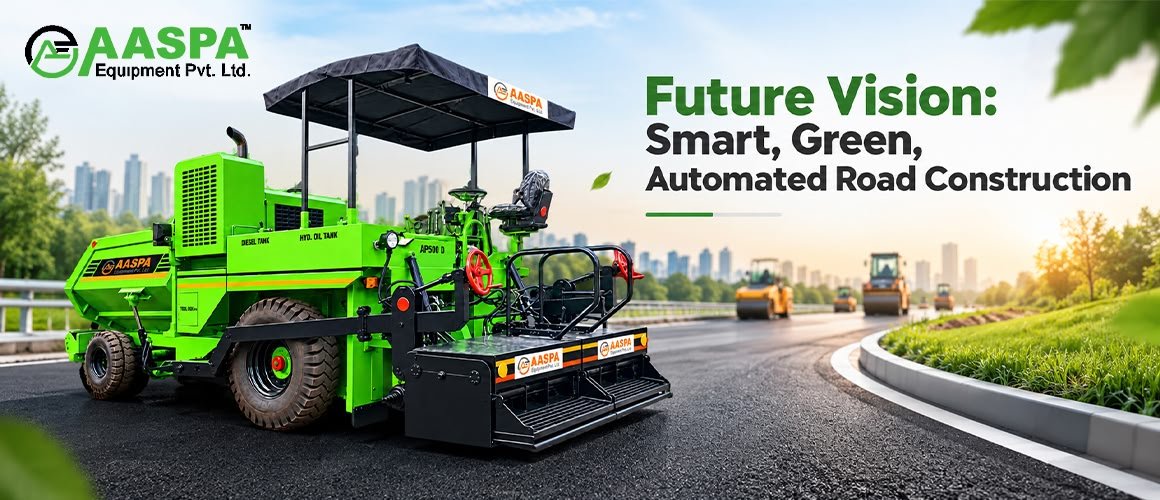
Explore the future of smart road construction with green technologies, automation and intelligent equipment designed for sustainable and efficient infrastructure.
The arteries of our civilization, the roads that connect us, are on the cusp of a profound transformation. No longer are we solely reliant on the brute force of manual labor and the established, often environmentally taxing, methods of the past. The future of road construction is emerging as a vibrant ecosystem of intelligent design, ecological responsibility, and unprecedented efficiency, promising to redefine how we build and maintain the pathways of our world. This evolution is not a distant dream but a rapidly unfolding reality, driven by relentless innovation and a growing imperative for sustainable development.
The Intelligent Network: Smart Roads and Data-Driven Decisions
The concept of a “smart road” extends far beyond merely the surface we drive upon. It encompasses an integrated network of sensors, communication systems, and analytical platforms that empower construction and maintenance with real-time data and predictive capabilities. This intelligent approach to infrastructure promises to optimize every stage of the road lifecycle, from initial planning and design to ongoing management and repair.
Predictive Pavement Health and Proactive Maintenance
Traditionally, road maintenance has been a reactive process, often addressing problems only after they have become significant and costly to fix. Smart road technology is poised to revolutionize this paradigm by enabling predictive pavement health monitoring. Embedded sensors, both in the pavement itself and within the construction machinery, can continuously collect data on factors such as stress, strain, temperature, moisture levels, and aggregate displacement.
Leveraging Big Data for Optimized Design and Construction
The sheer volume of data generated by smart road systems creates an unprecedented opportunity for optimization. Advanced analytics and artificial intelligence can process this information to identify patterns, predict potential failure points, and inform design modifications. This means that future roads can be designed with a deeper understanding of their environmental context and traffic loads, leading to more durable and cost-effective structures. Furthermore, construction planning can be refined to minimize waste and maximize resource utilization based on real-time site conditions.
Enhanced Safety Through Integrated Traffic Management
Beyond construction, smart roads are integral to the future of traffic management. Sensors can monitor traffic flow, detect anomalies, and communicate with connected vehicles and infrastructure. This real-time situational awareness allows for dynamic traffic control, rerouting, and incident response, significantly improving safety and reducing congestion. The data gathered during construction also contributes to this, providing insights into how different construction techniques might impact traffic flow and safety in the short and long term.
The Green Revolution: Sustainable Materials and Eco-Conscious Practices
The environmental footprint of traditional road construction has been a significant concern for decades. The extraction of raw materials, energy-intensive manufacturing processes, and the generation of waste have all contributed to ecological challenges. However, a powerful wave of green technologies is now sweeping through the industry, aiming to create roads that are not only functional but also environmentally responsible.
Recycled and Reclaimed Materials: Closing the Loop
One of the most impactful advancements in sustainable road construction lies in the widespread adoption of recycled and reclaimed materials. This includes the utilization of recycled asphalt pavement (RAP), reclaimed concrete aggregate (RCA), and even byproducts from other industries. By incorporating these materials, we reduce the demand for virgin resources, minimize landfill waste, and significantly lower the embodied energy associated with road construction.
Innovative Binders and Admixtures for Reduced Environmental Impact
Beyond aggregates, the binders used in asphalt and concrete are also undergoing a green transformation. Researchers are developing bio-based binders derived from renewable sources, as well as low-carbon cement alternatives. Furthermore, the use of chemical admixtures that enhance performance and durability can reduce the overall amount of material needed, further contributing to sustainability. These innovations often lead to pavements that are more resistant to wear and tear, thus extending their lifespan and reducing the frequency of costly and disruptive repairs.
Permeable Pavements and Stormwater Management
The impact of impervious road surfaces on stormwater runoff is a critical environmental issue. Impermeable surfaces prevent natural infiltration, leading to increased flooding, erosion, and the pollution of waterways with contaminants carried by runoff. Permeable pavement systems, constructed with porous materials, allow rainwater to pass through, replenishing groundwater and reducing the burden on drainage systems. This not only addresses environmental concerns but can also contribute to more resilient urban infrastructure.
Reduced Energy Consumption in Manufacturing and Construction
The pursuit of sustainability extends to the energy efficiency of the entire construction process. Innovations in material processing, such as lower-temperature asphalt mixing techniques, significantly reduce the energy required for production. On-site, the development of more fuel-efficient construction machinery and the adoption of electric or hybrid vehicles further contribute to a lower carbon footprint.
Automation Takes the Wheel: The Rise of the Robotic Road Builder
The integration of automation and robotics into road construction is not just about increasing speed; it is about achieving unprecedented levels of precision, safety, and efficiency. From autonomous surveying equipment to robotic paving machines, the future of road building is being shaped by intelligent machines that can perform complex tasks with greater accuracy and consistency than ever before.
Autonomous Surveying and Site Preparation
The initial phases of road construction, including surveying and site preparation, are prime candidates for automation. Autonomous drones equipped with advanced sensors can quickly and accurately map terrain, identify obstacles, and assess ground conditions. This data is then fed into sophisticated design software, streamlining the planning process and minimizing the need for manual surveys, which can be time-consuming and prone to human error.
Robotic Pavers and Finishers: Precision Paving Redefined
Perhaps the most visually striking aspect of automated road construction is the emergence of robotic pavers and finishers. These machines, guided by GPS and laser technology, can lay asphalt and concrete with exceptional uniformity and accuracy. This not only leads to smoother, more durable pavements but also reduces material waste and the need for extensive rework. The ability of these machines to operate continuously and with a high degree of precision can significantly shorten construction timelines.
Automated Compaction for Optimal Density
The compaction of asphalt and concrete is a critical step in ensuring the longevity and performance of a road. Automated compactors, equipped with intelligent sensors, can monitor the density of the material in real-time and adjust their operation accordingly. This ensures that the optimal level of compaction is achieved throughout the pavement, preventing premature rutting and cracking. This level of control is difficult to achieve with traditional, manually operated equipment.
The Human Element: Supervisors and Remote Operators
While automation is transforming the physical labor of road construction, it does not eliminate the need for human expertise. Instead, the role of the human worker is evolving. Skilled operators will be responsible for overseeing and managing these automated systems, interpreting data, and intervening when necessary. The focus shifts from repetitive physical tasks to cognitive skills, problem-solving, and the management of sophisticated technology.
The Materials Science Frontier: Next-Generation Pavement Solutions
|
Material |
Properties |
Advantages |
|
Graphene-Enhanced Asphalt |
Improved strength and conductivity |
Enhanced durability and reduced maintenance |
|
Recycled Rubber Pavement |
Shock absorption and noise reduction |
Environmentally friendly and cost-effective |
|
Self-Healing Concrete |
Automatic crack repair |
Extended lifespan and reduced need for repairs |
The very materials that form our roads are undergoing a renaissance, driven by advancements in materials science. Researchers are pushing the boundaries of what is possible, creating pavements that are not only more durable and sustainable but also possess novel functionalities.
Self-Healing Pavements: The Road That Repairs Itself
One of the most exciting advancements in pavement technology is the development of self-healing materials. These innovative pavements incorporate microcapsules containing healing agents that are released when cracks form, effectively repairing the damage autonomously. This has the potential to dramatically extend the lifespan of roads, reduce maintenance costs, and minimize disruptions to traffic.
High-Performance and Durable Composites
The use of advanced composite materials is also gaining traction in road construction. These materials, often incorporating Fibers and specialized resins, offer superior strength, durability, and resistance to wear and tear compared to traditional asphalt and concrete. While currently more expensive, their longevity and reduced maintenance needs can make them a cost-effective solution in the long run, particularly for high-traffic areas.
Pavements with Embedded Sensing and Communication Capabilities
The fusion of materials science and smart technology is leading to pavements with integrated sensing and communication capabilities. These “smart aggregates” or embedded sensors can monitor traffic conditions, structural integrity, and environmental factors, transmitting this data wirelessly to be analyzed. This creates a truly intelligent road infrastructure, capable of communicating with vehicles and providing real-time information.
Sound-Absorbing and Pollution-Reducing Pavements
Beyond structural integrity and data collection, new pavement materials are being developed to address other environmental concerns. Researchers are exploring sound-absorbing materials to mitigate noise pollution from traffic, as well as pavements designed to capture and neutralize air pollutants. These innovations contribute to healthier and more livable urban environments.
The Future of Mobility: A Seamless and Sustainable Network
The convergence of smart technologies, green innovations, and automation in road construction is not merely about building better roads; it is about creating a fundamentally different future for mobility. This future promises a more efficient, safer, and environmentally responsible transportation network.
Enhanced Durability and Extended Lifespans
The adoption of advanced materials, precision construction, and proactive maintenance enabled by smart technologies will lead to roads that are significantly more durable and have extended lifespans. This reduces the need for frequent and disruptive reconstruction projects, leading to fewer delays and lower long-term costs.
Reduced Environmental Impact Throughout the Lifecycle
From the sourcing of sustainable materials and the reduction of waste during construction to the operation of energy-efficient machinery and the potential for self-healing, the entire lifecycle of a road will see a drastic reduction in its environmental impact. This contributes to cleaner air, conserved natural resources, and a healthier planet.
Increased Safety and Efficiency for All Road Users
The integration of smart road technology with connected vehicles promises a future of enhanced safety. Real-time traffic information, predictive hazard alerts, and improved traffic flow management will minimize accidents and congestion. Automated construction itself also contributes to improved safety by removing human workers from hazardous environments.
The Foundation for Autonomous and Connected Transportation
The smart, green, and automated roads of the future will serve as the essential foundation for widespread autonomous and connected vehicle adoption. These intelligent pathways will provide the necessary infrastructure and communication networks for self-driving cars and other advanced mobility solutions to operate safely and efficiently, ushering in a new era of transportation.
FAQs
- What are the key innovations in road construction technology for the future?
Innovations in road construction technology for the future include smart and automated construction processes, green technologies for sustainable development, and the use of advanced materials for longer-lasting roads.
- How does automation play a role in the future of road development?
Automation plays a crucial role in the future of road development by increasing efficiency, reducing construction time, minimizing human error, and improving overall safety on construction sites.
- What are some examples of green technologies being used in sustainable road development?
Examples of green technologies being used in sustainable road development include the use of recycled materials, permeable pavements to reduce stormwater runoff, and the implementation of energy-efficient lighting systems.
- How do smart innovations contribute to the advancement of road construction technology?
Smart innovations contribute to the advancement of road construction technology by enabling real-time monitoring of construction processes, optimizing resource utilization, and enhancing the overall quality and durability of roads.
- What are the benefits of creating sustainable roads for the future?
Creating sustainable roads for the future offers benefits such as reduced environmental impact, lower maintenance costs, improved resilience to climate change, and enhanced overall quality of transportation infrastructure.